B2B Buying Guide · 2026-07-09 · 8 min read
Top 5 Lab Grown Melee Diamond Buying Checks for 2026-07-09
A practical 2026 wholesale buying guide for importers, distributors, retail buyers, brand founders, and procurement managers sourcing lab grown melee diamonds. Use this Top 5 checklist to compare suppliers on specification, QC, MOQ, lead time, packaging, compliance documents, sample approval, and RFQ detail before placing an order.
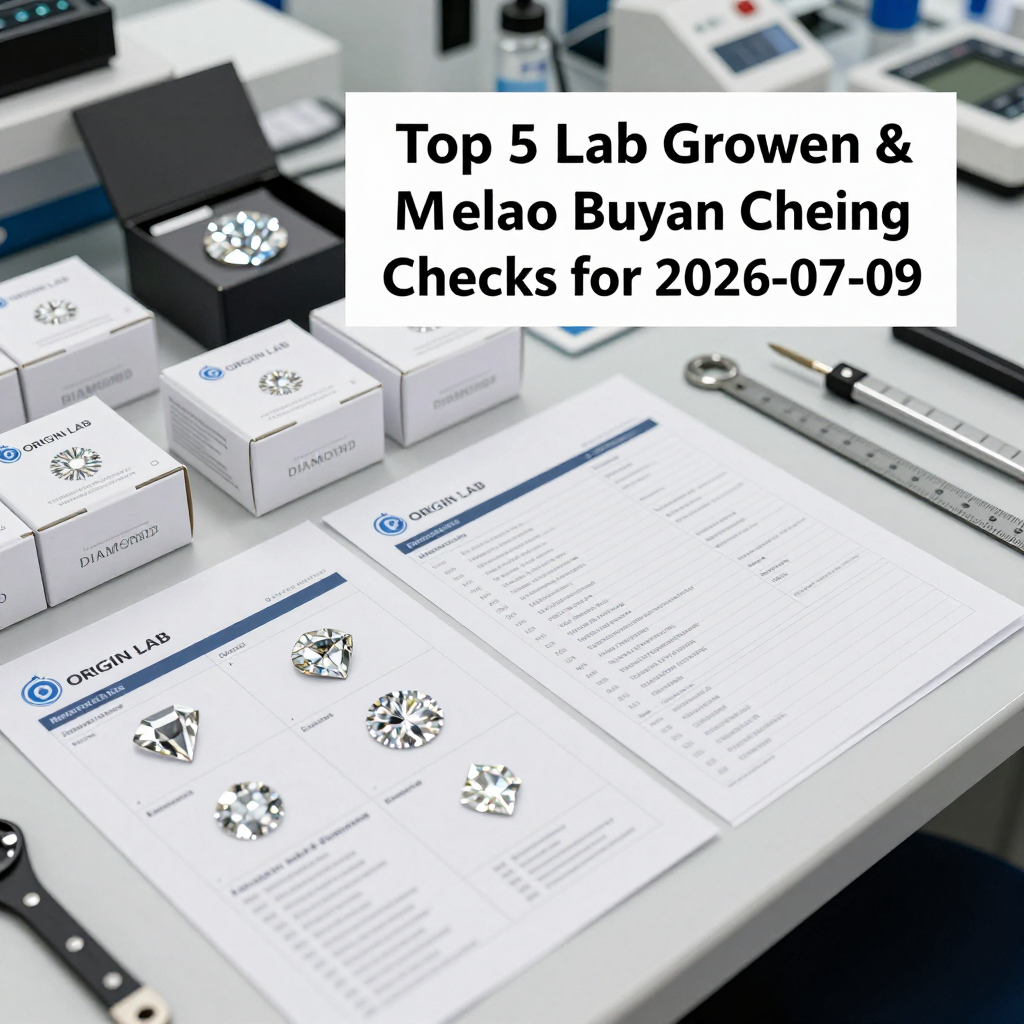
Buyer Comparison Table
| Factor | Option A | Option B | Buyer note |
|---|---|---|---|
| Specification control | Exact size range, tolerance, shape, and grade confirmed in writing | Loose description such as "good quality" or "commercial grade" | For melee, small deviations affect setting performance and visual uniformity. A strong quote should define measurable specs, not vague quality language. |
| Consistency across parcels | Matched parcels with stable color, clarity, and cut appearance | Mixed visual lots that may vary by batch | If you need repeat production or multi-SKU programs, compare consistency as a core buying factor, not just headline price. |
| QC and sample approval | Documented QC method plus approved reference sample before bulk shipment | No written QC process and no agreed approval point | Request the inspection workflow, acceptance criteria, and sample sign-off step before you commit to volume production. |
| MOQ and lead time | MOQ, stock status, and production lead time confirmed per spec | Only verbal estimates that change after deposit | Ask whether MOQ applies per SKU, per size band, or per total order. That detail directly affects planning and cost. |
| Compliance and shipping readiness | Export documents, packing list, label format, and shipment terms agreed early | Documents prepared after the order is finished | Many delays happen here. Confirm invoice terms, packing format, market-specific requirements, and freight responsibility before you issue the PO. |
1. Start With the Real Job of Melee Diamonds
Lab grown melee diamonds are not bought the same way as a center stone or a finished jewelry item. They are purchased as a production input, so the buying process should be built around consistency, repeatability, and setting performance. A parcel that looks acceptable in a showroom may still create problems on the bench if the stones vary too much in size, cut, or brightness. That is why a serious wholesale buyer should evaluate melee by specification, not by broad marketing language.
For most B2B buyers, the first question is not whether the diamonds are attractive in isolation. The first question is whether they will work in the intended product line. A jewelry brand may need strict matching across multiple SKUs. A manufacturer may need predictable tolerance so pavé settings hold properly. A distributor may need stable grading and clear packaging so the material can move through its own sales and repackaging workflow. Before you place a purchase order, align the buying criteria with the end use, because the right spec for bridal jewelry is not always the right spec for fashion, component supply, or resale parcels. If you are mapping products for a new program, review the [lab-grown diamond product range] and [diamond specifications] pages together before building the RFQ.
- Define the end use before pricing a parcel.
- Match stone spec to setting style and production volume.
- Treat consistency as a core requirement, not a side detail.
2. Check the Specification Sheet Before Anything Else
The first buying check is the specification sheet. This should define the size range, shape, color, clarity, cut style, and any special tolerance requirements. For melee, even small differences matter. A loose description such as "good quality" or "commercial grade" is not enough for procurement. Ask for measurable ranges. If you need round melee, define the exact diameter band and acceptable spread. If you need calibrated stones, state the dimensions and the allowed deviation. If you need a parcel for repeat production, ask whether the supplier can keep the spec stable across future batches.
Material and process details also belong in the spec discussion. Buyers should confirm that the stones are lab grown and ask which material and grading approach is being supplied for the intended line, along with the visible characteristics relevant to their market. You should also confirm whether the parcel is single shape or mixed, whether the parcel is single grade or mixed grade, and whether the supplier can separate by customer requirement. For many wholesale buyers, a clean, narrow spec is worth more than a slightly lower headline price because it reduces bench time and waste later. Use [diamond specifications] and the [lab-grown diamond product range] pages when aligning the target spec with available production options.
- Request exact size range and tolerance.
- Confirm shape, cut style, and grading basis.
- Ask whether the parcel is single-spec or mixed.
- State the end-use application clearly.
3. Evaluate QC, Sorting, and Sample Approval
The second buying check is quality control. In melee, QC is not just about finding obvious defects. It is about whether the supplier sorts accurately, keeps parcels consistent, and catches problems before shipment. Ask how the supplier inspects stones, how they separate rejected pieces, and whether the final parcel is checked again before packing. If you are buying for a brand or retail program, you should also ask how the supplier handles color consistency between batches and whether repeat orders are matched against a retained reference sample.
Sample approval is essential. A good B2B process uses a pre-production or pre-shipment sample to confirm what the bulk order will look like. For some buyers, this can be a master sample, a reference tray, or a small approved parcel. Clarify who signs off, what exactly is being approved, and whether the approved sample controls the final delivery standard. This step saves time because a dispute is much easier to avoid than to resolve after shipment. If the supplier cannot describe its inspection workflow, or if the sample does not reflect the final parcel, treat that as a procurement risk. Use [quality inspection] and [certification and reports] references to define the level of evidence you want before shipping.
- Ask for the QC method, not just a promise.
- Approve a reference sample before bulk shipment.
- Confirm how rejects and remakes are handled.
- Request photos, videos, or parcel records where available.
4. Confirm MOQ, Lead Time, and Packing Rules Early
The third buying check is commercial practicality. A lot of orders fail not because the diamonds are wrong, but because the buyer assumed availability that the supplier never committed to. MOQ must be stated clearly. If you need multiple size bands or multiple grades, ask whether MOQ applies per SKU, per spec, or per total order. That detail changes your cost structure and planning. The same is true for lead time. Distinguish between stock items and made-to-order parcels, and ask how long sample approval adds to the timeline.
Packaging matters more than many first-time buyers expect. Melee should arrive in a format that supports sorting, inventory control, and bench use. Confirm whether the parcel will be packed in trays, vials, sealed bags, labeled boxes, or another agreed format. Ask what the label includes, how weights are represented, and whether the packaging is suitable for transit and internal warehouse handling. If you buy for resale or distribution, ask for carton and inner pack details as well. Buyers should also clarify whether the supplier can support private label or neutral packaging, depending on channel needs. These details belong in the RFQ, not after the order is already moving.
- Confirm MOQ per spec and per SKU.
- Separate stock lead time from production lead time.
- Agree on packing format and label content.
- Ask how sample approval affects delivery dates.
5. Price the Parcel Correctly, Not Just Cheaply
The fourth buying check is price logic. Wholesale melee pricing is influenced by more than size and shape. Buyers should compare against the actual specification, sorting precision, and service level they receive. A lower price may reflect wider tolerance, mixed consistency, weaker documentation, or less support for sample approval and re-sorting. That is why comparing only a quoted rate without the spec details can produce a false result. A serious buyer evaluates total landed value, including time saved in rework and the risk of receiving unusable material.
When comparing offers, ask the supplier to explain the main wholesale price factors. For example, ask whether the parcel price changes with size band, color/clarity consistency, volume, packing method, document requirements, or shipment destination. Also check whether the quote is based on one fixed spec or a broader mixed lot. If you need a recurring supply agreement, ask for price breaks at different order tiers and whether the supplier can hold a spec for a defined period. This is the point where the [wholesale price factors] resource is useful, because it helps buyers compare apples to apples instead of comparing a narrow parcel with a loose one. A clean quote should show what is included and what is not, including packing, documents, and shipping terms.
- Compare quotes only after matching specs.
- Ask which factors move price up or down.
- Check what the quote includes: packing, docs, and shipping.
- Request tier pricing if you plan recurring orders.
6. Verify Compliance Documents and Shipping Readiness
The fifth buying check is export readiness. Even a well-sorted parcel can create delays if the paperwork is incomplete or the shipment terms are unclear. Buyers should ask which compliance documents are available for the order, which market-specific requirements may apply, and whether the supplier can prepare the invoice and packing list in the format your broker or receiving team needs. Depending on the destination, you may also need origin declarations, product identification details, or other supporting documents linked to your import process.
Shipping should be discussed before approval, not after production is complete. Confirm the shipping method, who books freight, what transit insurance applies, and where risk transfers. Buyers who receive regular replenishment orders should also ask about carton markings, palletization, and whether the supplier can keep the packaging stable for receiving efficiency. If you operate in a regulated or brand-sensitive channel, ask the supplier to keep a document pack for each order so later audits or internal reviews are easier. The best suppliers make export administration routine. The buyer should still verify every field, because a small mismatch in the paperwork can slow customs clearance or delay receiving at the warehouse.
For quotation and onboarding, use a structured RFQ rather than informal chat. The [request a diamond quote] page should be used to capture the product range, size, grade, quantity, packaging, destination, and timing in one place. That reduces back-and-forth and gives procurement a cleaner basis for comparison across suppliers.
- Confirm the required compliance documents before PO release.
- Align shipping terms, freight booking, and insurance in writing.
- Ask for carton, pallet, and label details if relevant.
- Keep a document pack per order for internal review.
7. Use a Practical RFQ Checklist for Melee Buying
A strong RFQ is the fastest way to get a usable quote. It should give the supplier enough detail to price accurately and enough structure for procurement to compare responses. For lab grown melee, the RFQ should include the intended application, stone shape, size range, quantity, target grade, tolerance, packaging requirement, destination, and delivery deadline. If you need matching for an ongoing program, state that clearly so the supplier understands that consistency across batches matters. If you want a sample before bulk approval, specify the approval step and timeline in the request.
The most effective RFQs also separate must-have requirements from preferences. For example, one field can define the exact target spec, while another field can note acceptable alternates if stock is limited. This makes the request more practical and avoids quotes that miss the mark. Procurement teams should also ask for clear confirmation of MOQ, lead time, sample policy, QC method, and export documents in the reply. If a supplier cannot answer these fields directly, the quote is incomplete and should be treated cautiously.
- Use a written RFQ, not only a message thread.
- Include size, shape, grade, quantity, and destination.
- State MOQ, lead time, and sample approval clearly.
- Ask the supplier to confirm QC and documents in the quote.
8. Buying Checks That Reduce Risk in 2026
For 2026 buying cycles, the best lab grown melee programs are built on repeatability. Buyers are under pressure to control cost, but they are also expected to reduce waste, maintain product consistency, and move faster from quote to shipment. That means the top five checks are not optional extras. They are the control points that keep production stable: specification accuracy, QC and sample approval, MOQ and lead time, price logic, and export readiness.
In practice, the suppliers that perform best in B2B trade are the ones that make the buying process easy to verify. They provide clear spec sheets, realistic commercial terms, traceable QC, neat packing, and complete shipping documents. They do not force the buyer to guess. If you are sourcing for a retail collection, a manufacturing line, or a wholesale program, your goal is the same: place a precise order, approve it once, and receive repeatable material that fits the job. That is the standard this article is built around, and it is the standard worth using on every RFQ.
- Prioritize repeatability over vague quality claims.
- Use the same checklist for first orders and replenishment orders.
- Treat clarity in the RFQ as a cost-control tool.
- Choose suppliers that can support repeat supply, not only one-off sales.
Related Origin Lab Diamonds pages
- lab-grown diamond product range
- wholesale price factors
- diamond specifications
- quality inspection
- certification and reports
FAQ
What is the most important check when buying lab grown melee diamonds wholesale?
The most important check is specification accuracy. For melee, the size range, tolerance, shape, color, clarity, and cut consistency affect how the stones perform in setting and how uniform the finished jewelry looks.
How should I confirm MOQ for a melee diamond order?
Ask whether MOQ applies per SKU, per size band, per grade, or per total order. If you need multiple specifications in one purchase, confirm the minimum for each line item before you issue the PO.
Why is sample approval necessary for melee diamonds?
Sample approval reduces the risk of receiving a bulk parcel that does not match the expected appearance or tolerance. It creates a reference point for color, size, packing, and overall quality before full shipment.
What documents should I ask for before shipment?
At minimum, ask for the commercial invoice, packing list, and any export or compliance documents relevant to your market. If your process requires additional reports or product details, confirm those early in the RFQ.
What should be included in a quote request for lab grown melee?
Include the intended use, shape, size range, grade, quantity, tolerance, MOQ expectations, lead time, packaging requirement, destination, shipping terms, and whether sample approval is required before bulk production.
Ready to quote this project?
Send specs, quantity, customization needs, destination, and deadline.
Request a quote