Wholesale Buying Guide · 2026-07-09 · 8 min read
Lab Grown Diamond Wholesale Price Factors Guide 2026-07-09
A practical B2B guide to the main factors that shape lab grown diamond wholesale pricing in 2026, including specifications, cutting quality, certification, MOQ, lead time, packaging, QC, compliance documents, shipping, and RFQ requirements for importers, distributors, retail buyers, brand founders, and procurement teams.
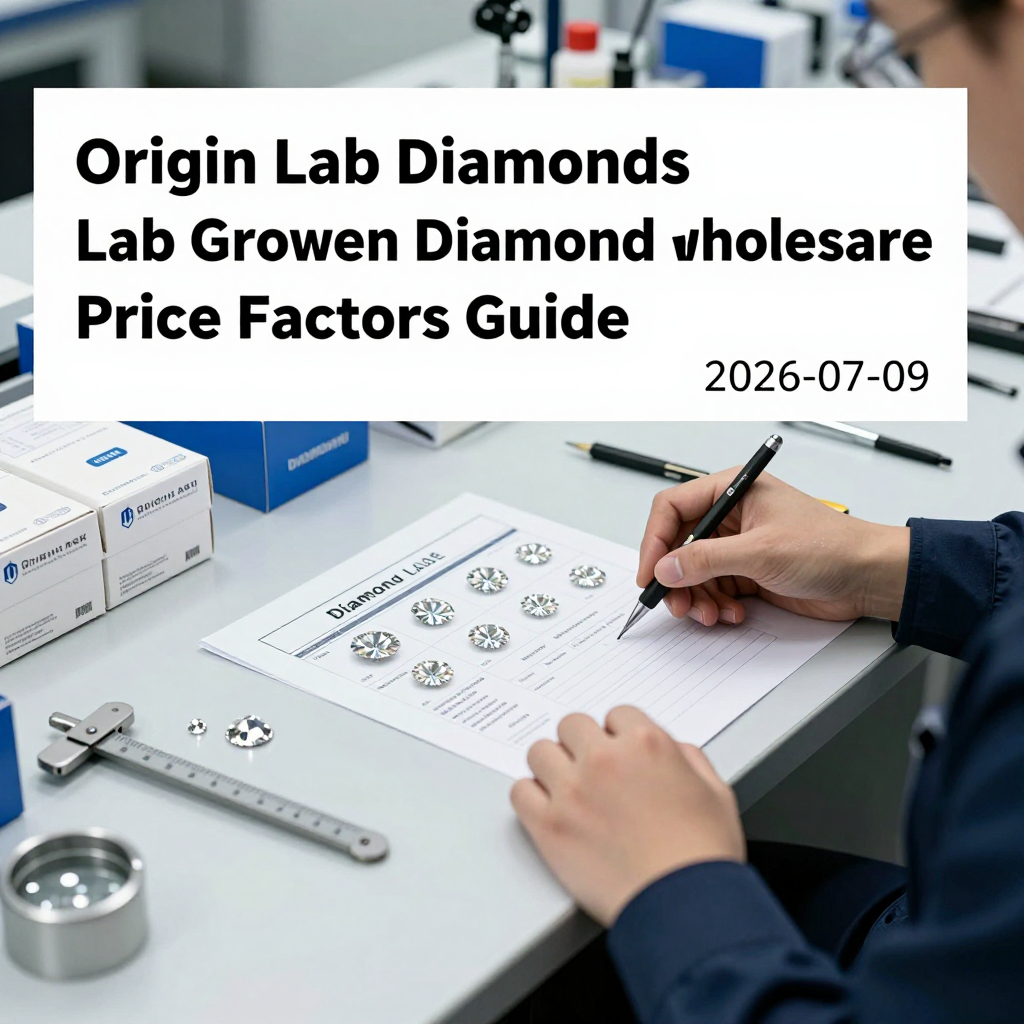
Buyer Comparison Table
| Factor | Option A | Option B | Buyer note |
|---|---|---|---|
| Carat size | Smaller melee or calibrated sizes | Larger single stones | Larger stones usually command higher unit prices because growth yield is lower and fewer stones meet the same quality targets. Compare size bands line by line rather than blending them into one quote. |
| Color grade | Near-colorless commercial grades | Higher color grades such as premium near-colorless or colorless ranges | Higher color grades often increase price, especially when buyers need uniformity across matching sets or branded collections. Compare only when the color target is identical across suppliers. |
| Clarity grade | Commercial clarity acceptable for broad retail use | Higher clarity for premium retail or fine jewelry | Better clarity raises cost because more stones are rejected during sorting and stricter grading is required. For a fair comparison, confirm whether the quote assumes eye-clean standards or strict laboratory grading. |
| Cut quality | Standard cutting for volume programs | Tighter cut proportions, polish, and symmetry targets | Cut quality directly affects brilliance and value; tighter tolerances often cost more but can improve sell-through and reduce returns. Ask whether cut, polish, and symmetry are priced together or separately. |
| Shape and style | Common shapes like round and popular calibrated cuts | Less common fancy shapes or custom matching requirements | Unusual shapes or tight matching specs can increase price and extend lead time because production flexibility is lower. Best fit depends on whether the order is for mass retail, matching sets, or custom work. |
| Order structure | Single small-order batches | Higher-volume recurring wholesale programs | Larger and repeat orders may improve price consistency, but buyers should also confirm MOQ, payment terms, and batch repeatability. Compare spot pricing against program pricing before deciding. |
| Certification and reports | Basic documentation only | Full grading reports or additional batch documentation | More documentation usually adds cost, handling time, and release controls. Confirm exactly which reports are included in the quote before comparing suppliers. |
| Lead time | Standard production schedule | Rush or expedited delivery target | Shorter lead times often raise cost because the supplier may need to prioritize labor, sorting, or shipping. Compare the standard schedule and the expedited schedule separately. |
1. Top 5 Factors That Drive Lab Grown Diamond Wholesale Pricing in 2026
Wholesale pricing for lab grown diamonds is shaped by a small set of high-impact factors. For most B2B buyers, the top five are carat size, color, clarity, cut quality, and order structure. These are the first items to compare in any quote review because they influence yield, sorting effort, and the supplier’s ability to repeat the same result across a batch.
The practical rule is straightforward: the closer the order is to a premium, tightly controlled spec, the higher the price tends to be. Larger stones, tighter color limits, stricter clarity targets, and more exact cut requirements all reduce production flexibility. That effect becomes stronger when buyers also need matching sets, consistent inventory, or a recurring supply program.
A useful procurement approach is to separate must-have specs from flexible specs before asking for quotes. That helps suppliers quote accurately and gives buyers a cleaner way to compare wholesale offers on equal terms. It also makes price differences easier to explain internally when procurement, merchandising, and sales are all involved.
- Top 5 pricing drivers: carat size, color, clarity, cut, and order structure.
- Tighter specs usually raise price and reduce sourcing flexibility.
- Matching sets and repeat programs often cost more than open-spec buying.
- Decide which specs are fixed before comparing supplier quotations.
2. What Actually Drives Lab Grown Diamond Wholesale Pricing in 2026
Wholesale pricing for lab grown diamonds is not determined by one number. It is the result of product specification, manufacturing yield, grading tolerance, and the commercial terms attached to the order. For B2B buyers, the main task is separating visible product differences from hidden procurement costs. A stone with the same carat weight can still quote differently depending on color, clarity, cut precision, and how tightly the supplier must match the order.
In 2026, wholesale buyers are paying closer attention to total landed cost, not just ex-works unit price. That means suppliers need to quote clearly on the diamond itself, the QC process, certification or reports, packaging, compliance documentation, and logistics. The final price can change if buyers request special screening, stricter matching, custom parceling, or an accelerated lead time. This is why a structured RFQ matters in lab grown diamond sourcing.
A clear pricing discussion should also cover whether the quote is for a spot order or a repeated supply program. Program pricing may look different from one-off pricing because the supplier can plan production, sorting, and release more efficiently. Buyers should ask for both when possible and compare them on the same spec basis.
- Ask for price by full specification, not only by carat.
- Confirm whether the quote includes grading reports, QC, and packaging.
- Check if the supplier prices by loose stones, calibrated sizes, or matched lots.
- Review whether the quotation assumes standard lead time or expedited production.
3. Specification Factors: Size, Color, Clarity, Cut, Shape, and Yield
The core stone specification is the biggest driver of wholesale price. Carat size matters because larger stones are harder to produce in high yield while maintaining quality. Color and clarity also affect price because higher grading targets reduce usable output from each production batch. Buyers sourcing for retail collections or branded lines should expect to pay more for tighter matching across multiple stones.
Cut is especially important in lab grown diamonds because a strong growth result can still lose value if the final finish is weak. Proportions, polish, symmetry, and overall appearance affect brilliance, consistency, and resale value. Shape also changes price. Round stones often have different pricing dynamics than fancy shapes because cutting efficiency and market demand are not the same. Buyers should use a detailed diamond specification sheet when comparing suppliers, because vague descriptions lead to unreliable quotations and inconsistent deliveries.
Yield and sorting effort also influence cost. If a buyer asks for a narrow size band, strict color ranges, high clarity, and premium cut performance at the same time, the supplier may need to sort more inventory to complete the order. That extra sorting and rejection cost is usually reflected in the quote. Buyers should decide which specs are essential and which can be flexible before they start requesting pricing.
- Carat weight, color, clarity, and cut work together, not separately.
- Tighter tolerances generally increase price and extend sourcing time.
- Fancy shapes, matching sets, and calibrated sizes can require additional sorting.
- The most cost-efficient order usually has clear priority specs and realistic flexibility.
4. Comparison Guide: How to Read Quotes Side by Side
A comparison only works when the quotes are built on the same basis. Before reviewing price, confirm that each supplier is quoting the same size range, color range, clarity range, cut standard, quantity, and delivery term. Without that alignment, the lowest number can hide a weaker spec, a different grading assumption, or additional charges that appear later in the process.
The best comparison method is to review price, spec, lead time, MOQ, document scope, and packing format together. That gives procurement teams a real decision structure instead of a simple unit-price contest. For larger or recurring orders, ask suppliers to show where the price changes by volume tier. That makes it easier to judge whether a quotation is genuinely competitive or only attractive at one small volume point.
When a buyer is comparing suppliers for the same product, the goal is not to find a fake ranking. It is to understand which supplier is strongest on price, which is strongest on consistency, and which is strongest on commercial fit. That is a better buying framework for wholesale sourcing than assuming one quotation is best in every category.
- Compare only like-for-like specs.
- Review price, MOQ, lead time, documents, and packing together.
- Ask for volume tiers when you expect repeat buying.
- Separate price competitiveness from consistency and commercial fit.
5. Certification, Reports, and Quality Inspection Costs
Certification and reports matter because they reduce buyer risk, but they also add cost. Depending on the sales channel and target market, buyers may request grading reports, batch-level documentation, or additional testing and screening. These services create cost because they require examination, documentation, handling, and time. The more traceability and verification the buyer needs, the more important it is to confirm exactly what is included in the quote.
Quality inspection is another pricing factor. Wholesale buyers often want confirmation that stones meet agreed specifications before shipment. This may include visual inspection, measurement checks, matching review, inclusion review, or sample approval against an approved master stone or approval set. If the buyer needs a stricter inspection process, the supplier may need additional labor and release time. In procurement terms, that is both a quality issue and a schedule issue.
The practical approach is to ask what documents will ship with the order and what level of inspection is performed before dispatch. Buyers should clarify whether the supplier provides grading reports, batch lists, internal QC records, or other compliance documents requested for import or distribution. If the order is for retail resale, those documents can support downstream trust and reduce dispute risk.
- Confirm whether pricing includes grading reports or separate documentation fees.
- Ask how quality inspection is performed and what sampling method is used.
- Request sample approval before full production when the order is spec-sensitive.
- Align documentation needs with your target market before comparing suppliers.
6. MOQ, Lead Time, and Order Structure: How Procurement Terms Change Price
MOQ, or minimum order quantity, has a direct influence on wholesale pricing. Suppliers usually price more efficiently when the order size fits their production and sorting workflow. Small orders can be more expensive per unit because setup, inspection, packaging, and administration are spread across fewer stones. Larger repeat orders may improve pricing, but only if the buyer’s spec is stable and the order can be produced efficiently.
Lead time also affects price. Standard production schedules are easier to cost than rush orders. If the buyer needs an accelerated shipment, the supplier may need to prioritize that order over others, rearrange labor, or use faster logistics. In many cases, the unit price or service fee will reflect that urgency. Procurement teams should ask for both standard and expedited options so they can compare cost against delivery risk.
A useful RFQ should include order structure details: target quantity, repeat forecast, expected monthly or quarterly volume, split by size or shape, and whether the buyer wants mixed parcels or single-spec lots. This information helps the supplier quote accurately and shows where economies of scale are realistic. It also helps the buyer understand whether the price is a spot quotation or a repeat-program price.
- MOQ can raise unit cost when the order is small or highly customized.
- Rush lead times usually increase cost or reduce sourcing flexibility.
- Repeat volume may support better pricing if the spec remains consistent.
- Always ask whether the quote is for a spot order, recurring order, or annual supply program.
7. Packaging, Branding, and Compliance Documents: Small Items That Affect Big Decisions
Packaging may seem secondary, but in wholesale diamond sourcing it can affect cost and handling efficiency. Standard parceling is typically simpler and cheaper than custom branded packaging, retail-ready presentation, or special labeling. If the buyer needs branded boxes, specific inserts, barcodes, or private-label presentation, those requirements should be listed in the RFQ because they can change both material cost and handling time.
Compliance documents are another operational factor. Importers and distributors often need paperwork aligned with internal policy, customs clearance, and downstream retail requirements. Depending on the market and transaction structure, this may include invoice details, packing lists, origin declarations, grading documents, batch references, and other supporting files. If a buyer waits until after quotation to request documents, the supplier may need to rework the order or adjust the timeline. That can affect price and lead time.
For brand founders and retail buyers, packaging is part of the customer experience. However, packaging should still be defined clearly in the sourcing brief. A package that looks simple can still require precise labeling, inventory control, and unit-level handling. The most efficient approach is to separate diamond specification, packaging requirement, and document requirement into distinct RFQ fields.
- Custom packaging usually adds cost and handling time.
- List labeling, barcode, and private-brand requirements in the RFQ.
- Confirm which compliance documents will be provided before shipment.
- Separate product price from packaging and paperwork when comparing suppliers.
8. Shipping, Incoterms, Insurance, and Landed Cost Planning
Shipping can materially change the final price of a lab grown diamond order, especially for international buyers. The quotation may look attractive at the product level, but landed cost can rise after freight, insurance, customs-related charges, and local handling fees are added. Buyers should therefore ask whether the quote is ex-works, FOB, CIF, or another trading term and compare quotations only after normalizing the logistics structure.
Insurance and shipment security matter for high-value, compact goods like diamonds. Even when the product cost is modest per stone, the shipment value can still be significant. Buyers should discuss packing format, declared value, and preferred shipping method early in the sourcing process. If the supplier and buyer disagree on logistics assumptions, the final cost and liability allocation can become unclear.
Procurement teams should build a landed-cost model before approving a supplier. That model should include the stone price, inspection fees, packaging, compliance documents, freight, insurance, and any destination-side charges known at the time of order. This approach avoids false comparisons and helps the buyer choose the supplier with the best total value, not just the lowest headline price.
- Compare quotes using the same Incoterm whenever possible.
- Include freight, insurance, and destination charges in landed-cost planning.
- Confirm packing and declared-value expectations before shipment.
- Do not compare unit prices without checking logistics assumptions.
9. RFQ Checklist: The Fields Buyers Should Always Include
A complete RFQ is the fastest way to get a reliable quote. For lab grown diamond wholesale purchasing, the supplier needs enough detail to price the product correctly, prepare the right documentation, and estimate a realistic lead time. Incomplete RFQs often lead to repeated revisions, inconsistent offers, or pricing that changes after clarification. A strong RFQ is not only about speed; it is about reducing procurement risk.
Use the checklist below as a practical template before contacting suppliers. It covers the essential data points procurement managers, distributors, retail buyers, and brand founders should provide. If your order includes mixed sizes or multiple price tiers, break them out clearly so the supplier can quote each line item accurately. If you need sample approval, say so upfront and specify whether approval is by photo, video, physical sample, or master reference stone.
This checklist is also useful for internal alignment. Sales, merchandising, and procurement teams often have different expectations, and a structured RFQ helps everyone agree on the target product before negotiation begins. That can save time, protect margin, and reduce the risk of receiving stones that are technically acceptable but commercially unsuitable for the buyer’s channel.
- RFQ fields to include: carat size or size range, shape, color, clarity, cut, polish, symmetry, fluorescence, quantity, and matching tolerance.
- State MOQ expectations and whether the order is a one-time purchase or recurring program.
- Specify packaging needs: standard parcel, custom label, retail-ready box, or private-label packaging.
- List compliance document requirements: grading reports, batch list, invoice format, packing list, and any market-specific paperwork.
- Provide lead time target, shipping destination, preferred Incoterm, and whether insurance is required.
- Add sample approval instructions and acceptable substitution limits if any.
- Mention quality inspection requirements and whether pre-shipment photos or videos are needed.
10. Best Way to Evaluate a Wholesale Quote Beyond Unit Price
A smart buyer compares more than the per-stone number. The right evaluation starts with spec accuracy: does the quote match the exact size, shape, color, and clarity required for the channel? Next, check whether the supplier can maintain consistency across the full batch. A low price is less useful if the order arrives with mixed quality, delayed documents, or a high rejection rate during receiving inspection.
Then review commercial terms. MOQ, lead time, payment structure, sample policy, QC steps, and shipping assumptions all influence risk. If one supplier offers a lower unit price but requires longer lead time, fewer documents, or more restrictive substitutions, the apparent saving may disappear. Buyers should ask how the supplier handles out-of-spec stones, how many inspection stages are performed, and whether the order can be sampled before release.
Finally, compare total business fit. A reliable supplier should be able to explain how they build the price, what factors are flexible, and where buyers can save without damaging product quality. This matters for importers and brand owners who need repeatable supply rather than one-off spot buys. The strongest wholesale partnership is built on transparent pricing, stable specs, and predictable delivery performance.
- Compare spec matching, not only price.
- Review supplier flexibility on substitutions and out-of-spec handling.
- Check consistency, document support, and shipment reliability.
- Choose the quote that delivers the lowest controllable total cost.
Related Origin Lab Diamonds pages
- lab-grown diamond product range
- wholesale price factors
- diamond specifications
- quality inspection
- certification and reports
FAQ
What is the biggest factor in lab grown diamond wholesale price?
The biggest factor is usually the full specification set: carat size, color, clarity, cut, and shape. These determine yield, sorting difficulty, and how many stones meet the buyer’s target standard.
Does MOQ affect lab grown diamond pricing?
Yes. Smaller orders often cost more per unit because setup, inspection, packaging, and administration are spread across fewer stones. Larger or repeat orders may improve pricing if the specification remains stable.
Should buyers request certification or reports for every order?
Buyers should request the documentation required by their market and channel. Depending on the order, that may include grading reports, batch lists, or other supporting paperwork. Clarify this before quotation so the supplier can price accurately.
Why do two quotes for similar-looking diamonds differ so much?
They may differ in hidden details such as cut quality, grading tolerance, inspection method, packaging, shipping terms, or whether the supplier has priced in reports and compliance documents.
What should be included in a diamond RFQ?
Include size, shape, color, clarity, cut, quantity, MOQ expectations, lead time, packaging, QC requirements, compliance documents, shipping destination, preferred Incoterm, and sample approval instructions.
Ready to quote this project?
Send specs, quantity, customization needs, destination, and deadline.
Request a quote