Procurement Guides · 2026-07-10 · 8 min read
Custom Cut Lab Grown Diamonds: MOQ, Lead Time and QC for B2B Orders
A practical B2B buying guide for custom cut lab grown diamonds, covering MOQ basis, CVD and HPHT material planning, sample approval, lead time, QC tolerances, grading reports, packing, and export paperwork for importers, distributors, retail buyers, jewelry brands, and procurement teams.
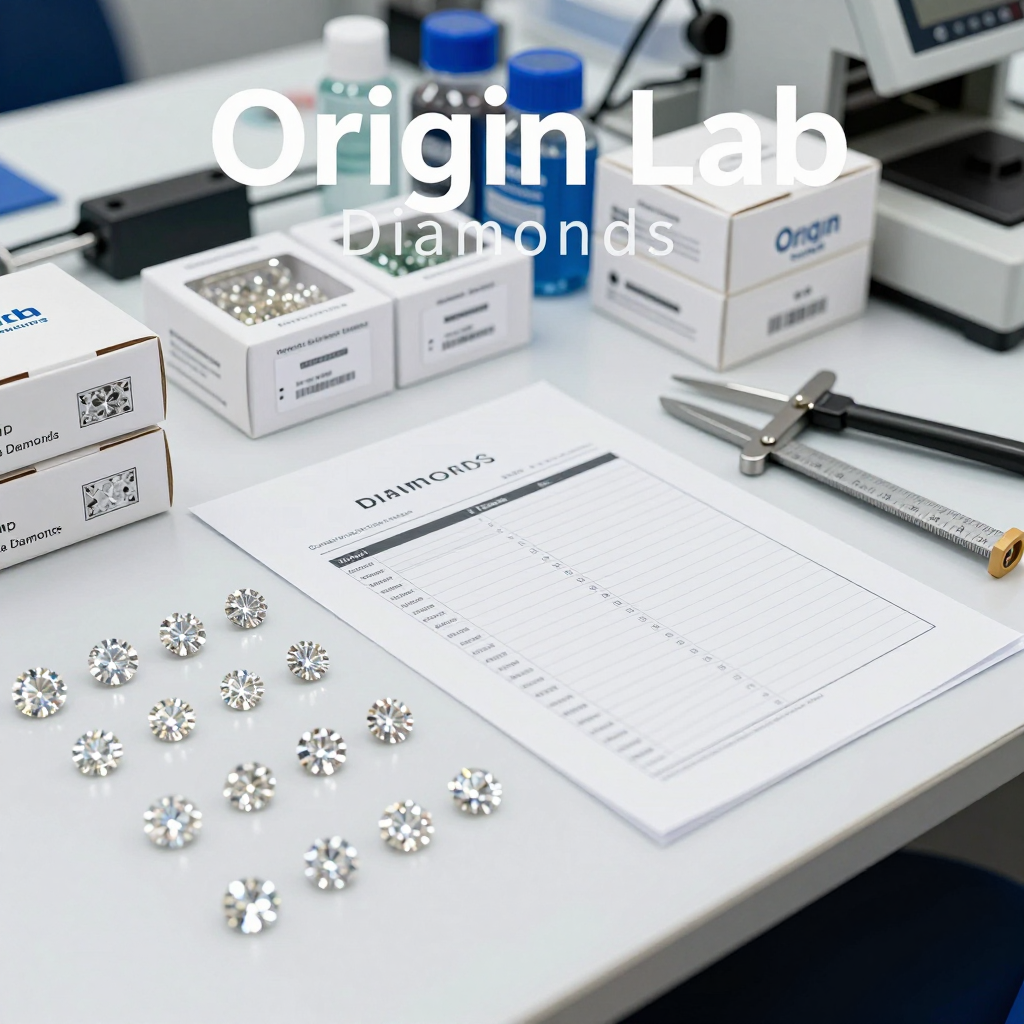
Buyer Comparison Table
| Factor | Option A | Option B | Buyer note |
|---|---|---|---|
| MOQ basis | Standard calibrated rounds, ovals, emeralds, pears, cushions, radiants, or princess cuts | Shield, kite, bullet, hexagon, portrait, old mine, branded ratio, or matched layout | Ask if MOQ is per piece, carat, size, shape, grade, pair, layout, SKU, or shipment. A small order spread across many SKUs can be harder than a larger order in two sizes. |
| Material route | Available polished, semi-polished, CVD rough, or HPHT rough suitable for the target size | Special rough allocation for strict color, clarity, depth, ratio, or proprietary outline | Ask whether the quote is based on existing inventory, recutting, or new production. Material availability can change MOQ, yield, price, and lead time. |
| Pilot order | One shape, two or three sizes, one color band, one clarity band | Many shapes, grades, sizes, report types, and packing rules in one trial | A narrow pilot gives cleaner yield, QC, and sell-through data. Too many tiny SKU lines create sorting, reporting, and packing risk. |
| Sample approval | Physical sample with measurement sheet and retained master reference | Photo, video, CAD drawing, scan approval, or digital make approval only | Use a physical sample for new silhouettes, fixed settings, proprietary looks, and high-value center stones. Digital approval works better for repeat programs with stable tolerances. |
| Lead-time trigger | Clock starts after final specification and deposit | Clock starts after sample approval, report instruction, or rough allocation | A quote saying “4 weeks” is incomplete unless it states what starts the schedule and whether grading reports and inscriptions are included. |
| QC route | Supplier 100% measurement and visual QC with final parcel photos | Buyer AQL, retained sample comparison, third-party inspection, or pre-shipment video review | Use stricter QC for center stones, matched pairs, proprietary cuts, and setting-critical sizes. Define replacement, re-cut, or rejection responsibility in writing. |
| Reports | Batch QC sheet, invoice details, and packing list | Individual grading reports, laser inscriptions, and report-number spreadsheet | Individual reports add cost, time, and handling. Set the report threshold before cutting begins. |
| Packing | Bulk parcel by shape, size, color, clarity, and carat range | Piece-level bags, barcode labels, report sleeves, pair cards, layout cards, or retail-ready SKU packs | Packing rules belong in the RFQ. Late repacking can cause report mismatch, separated pairs, and receiving errors. |
When a custom cut order needs stricter buying control
A buyer searching for custom cut lab grown diamonds MOQ, lead time, and QC is usually not asking whether supply exists. The real question is whether a non-standard cut can arrive on time, fit the setting, match the approved look, pass receiving inspection, and protect margin.
Custom cutting changes the purchase risk. The supplier may need to allocate suitable CVD or HPHT rough, calculate yield, plan the cut, make a trial stone, adjust the make, cut the batch, sort by grade, inspect dimensions, submit grading reports if required, and pack by SKU. Each added rule changes cost or time: exact ratio, matched pairs, shallow portrait cut, branded outline, individual reports, barcode labels, or private packing.
The safest buying format is a technical RFQ. It should tell the supplier what controls acceptance: setting fit, face-up spread, report grade, outline, brightness, launch date, or price ceiling. If that priority is not stated, the quotation will be built on assumptions.
- Add dimensions, ratio, appearance limits, material preference if any, report rules, packing fields, and lead-time trigger to the RFQ.
- State whether the order is a sample run, launch order, replenishment program, or one-time project.
- Ask the supplier to identify yield, cutting, matching, and QC risks before confirming final MOQ.
- Avoid loose terms such as “nice make,” “good ratio,” “premium look,” or “minimal bow-tie.”
- Keep one approved master sample, scan, video, or signed measurement sheet for repeat orders.
MOQ: the number depends on production risk, not only supplier policy
MOQ is partly commercial and partly technical. The supplier has to consider rough availability, cutter setup, yield loss, sorting loss, QC rejection, report handling, and whether off-spec stones can be sold elsewhere.
A near-standard calibrated oval in a commercial size may be possible in a smaller batch. A shield with exact corners, a shallow portrait cut, a branded elongated cushion, or a kite layout for earrings may need more production volume to achieve enough accepted pieces.
Do not compare MOQ quotes until the unit is clear. One supplier may quote by total carats, another by pieces per size, another by SKU. A 50-piece order across 20 SKUs can carry more production work than 100 pieces in two repeatable sizes.
- Ask whether MOQ is per shape, size, color and clarity band, matched pair, layout, SKU, total carat weight, or shipment.
- Ask what happens to off-spec stones: re-cut, downgrade, separate sale, or exclusion from invoice.
- Ask if MOQ changes when ratio tolerance widens, for example from 1.38-1.42 to 1.35-1.45.
- Ask whether reports are required for every stone or only above a size threshold.
- For a pilot order, reduce the number of SKUs before reducing each SKU to an impractical quantity.
Practical MOQ ranges for early planning
Ranges can help budgeting, but they are not promises. Suitable material, tolerance width, grade target, matching rules, and report requirements can move the order up or down.
Near-standard custom programs may sometimes be discussed around 10 to 30 pieces per size, or a small total carat batch, if suitable polished, semi-polished, CVD, or HPHT material is available. More specific silhouettes, proprietary facet patterns, strict ratio bands, matched pairs, and layout programs often move toward 30 to 100 pieces per size group or a larger production lot.
The common mistake is asking for low quantity and high complexity at the same time. Five pieces each of kite, shield, bullet, hexagon, and portrait cuts in several sizes, all E-F VS with individual reports and private SKU bags, is not a simple trial. It is many small production jobs.
- Good pilot: one custom shape, three sizes, one color band, one clarity band, one report rule, one packing format.
- Higher-risk pilot: many silhouettes, narrow grades, strict matching, individual reports, and custom labels in the same order.
- If the first goal is market testing, keep the design range narrow and measure sell-through before expanding SKUs.
Lead time: quote the schedule, not a vague week count
Lead time for custom cut lab grown diamonds should be broken into stages: RFQ review, tolerance confirmation, material allocation, cutting plan, sample cutting, sample inspection, buyer approval, bulk cutting, re-polishing if needed, report submission, inscription match, final QC, packing, documents, and freight pickup.
For near-standard custom orders, a practical estimate may be 2 to 4 weeks after final technical approval if material is available and individual reports are not required. Complex silhouettes, matched programs, tight calibration, multi-SKU orders, grading reports, inscriptions, private labels, holidays, or consolidated freight can move the timeline to 4 to 8 weeks or more.
Buyer approval time is often the hidden delay. If merchandising, design, retail operations, finance, and a founder all need to sign off, schedule that review before the sample is shipped. Name the approver and set a response window.
- Request target dates for sample, buyer approval, bulk completion, report completion, final QC, packing, and pickup.
- Write whether lead time starts from deposit, final specification, sample approval, report instruction, or rough allocation.
- Clarify whether reports happen before or after final buyer measurement approval.
- State if partial shipment is allowed when some sizes are ready and others are delayed.
- Confirm whether the quoted date means ex-factory, courier pickup, export dispatch, or destination arrival.
Sample approval: decide what the sample controls
A sample is not only a beauty check. For a new cut, review length, width, depth, carat, ratio, table, depth percentage, girdle, culet, outline, corner shape, facet style, bow-tie, windowing, face-up spread, polish, symmetry, grade range, and setting fit.
Approval evidence matters. Use a retained physical sample, signed sheet, high-resolution face-up and side-view video, measurement image, scan file, or numbered sample record. Words such as “soft corners,” “antique look,” “elongated make,” and “low bow-tie” are subjective without a reference.
The bulk order does not automatically match the sample exactly. If the approved stone is a 1.00 ct elongated cushion with a 1.40 ratio, the PO still needs acceptable ranges such as 0.90-1.10 ct, 1.36-1.44 ratio, and millimeter limits. For fixed settings, millimeters may matter more than carat. For loose resale, report grade and face-up appearance may matter more.
- Approve the sample with measured data, not only chat comments or attractive photos.
- State whether the master sample controls outline, ratio, facet style, brightness, or setting fit.
- Define who pays for a second sample if the buyer changes the design after the first sample matches the RFQ.
- For repeat orders, require comparison against the approved sample or digital record.
- If using digital approval only, require consistent lighting, face-up and side-view videos, and a full measurement table.
RFQ specification fields buyers should include
A shape name is not enough. Oval, cushion, radiant, shield, kite, bullet, portrait, emerald, and old mine styles can vary widely in outline, depth, table, facet arrangement, face-up size, and setting behavior.
The RFQ should include the end use. Tennis bracelets need calibration and color consistency. Engagement ring centers may need reports and strict clarity placement. Earrings need pair matching. Geometric layouts need consistent outline and point orientation. Fashion jewelry may accept a wider clarity band if inclusions are hidden after setting.
Tell the supplier which fields are critical and which are flexible. If setting fit is critical, dimensions and depth may override exact carat. If loose resale is the goal, report grade, video appearance, and face-up spread may drive acceptance.
- Shape and cut style, with drawing, CAD file, photo reference, or approved sample number.
- Production route or material note if relevant, such as CVD, HPHT, existing polished inventory, recut material, or new cutting from rough.
- Quantity by SKU, piece count, and total carats, not only total order value.
- Carat range plus millimeter length, width, and depth tolerance.
- Length-to-width ratio for elongated, pear, oval, marquise, shield, kite, cushion, and hexagon cuts.
- Table, depth percentage, girdle, culet, corner style, facet pattern, bow-tie limit, and windowing limit.
- Color, clarity, eye-clean rule, polish, symmetry, fluorescence if applicable, and inclusion placement restrictions.
- Report type, laser inscription requirement, report list format, and report threshold by size or value.
RFQ wording buyers can adapt
Use wording that forces feasibility comments before price is locked. The supplier should not have to guess the tolerance, report route, material route, or packing method.
Example for a custom center-stone program: Please quote custom cut lab grown diamonds, elongated cushion brilliant, 1.00 ct nominal, acceptable 0.90-1.10 ct, ratio 1.36-1.42, target dimensions 7.8 x 5.6 mm with plus or minus 0.15 mm length and width tolerance, depth suitable for standard setting, E-F color, VS1-VS2 clarity, eye-clean face up, polish VG or better, symmetry VG or better, no open surface-reaching inclusions, no chips, no heavy bow-tie, no visible windowing. Pilot quantity 30 pieces. Please confirm MOQ basis, sample cost, production lead time after sample approval, report options, packing method, and risk points.
Example for pairs: Please quote matched pear brilliant lab grown diamond pairs for earrings, 0.50 ct each stone nominal, 1.00 ct pair total, ratio 1.55-1.65, D-F color, VS clarity, pair color difference not more than one grade, length and width difference within each pair not more than 0.10 mm where feasible, similar face-up brightness, no dominant bow-tie. Pack each pair together with pair ID and report numbers if applicable.
- Ask for feasibility, MOQ unit, tolerance comments, sample timeline, bulk timeline, report timeline, and packing capability.
- Separate stone price, report cost, sample cost, packaging cost, freight estimate, and re-cut or replacement policy.
- State that acceptance is based on the written tolerance table and approved master sample.
- Ask whether wider tolerance would reduce price, MOQ, or lead time.
- Ask the supplier to identify unrealistic fields before material is allocated.
QC before shipment: what to check and when
QC should happen before packing, not after the buyer opens the parcel. Custom cut goods need staged inspection: measurement after cutting, visual make review, polishing inspection, grade sorting, matching review, report verification, inscription verification, label check, packing count, and final parcel photos or videos.
Measurement QC confirms length, width, depth, ratio, carat weight, and tolerance compliance. Visual QC checks outline symmetry, corner consistency, facet alignment, table centering, bow-tie, windowing, extinction, brightness balance, girdle condition, culet, chips, abrasions, scratches, polish lines, and surface-reaching inclusions.
Documentation QC is a separate checkpoint. Match stone, parcel label, report number, laser inscription, SKU, purchase order line, invoice, and packing list before dispatch. One report mismatch can stop receiving for a distributor or retailer.
- Use 100% inspection for center stones, matched pairs, proprietary cuts, and setting-critical sizes.
- Use AQL only when order volume supports it and the acceptance plan is agreed before production.
- Check dimensions before report submission if the report will lock stone identity.
- Review face-up appearance under consistent lighting and background.
- For multi-SKU shipments, request final packing photos or video showing labels and report numbers.
Defects that matter most in custom fancy shapes
A stone can meet color and clarity targets and still fail commercially. A shield may have uneven sides. A kite may have weak points. A portrait cut may show too much windowing. A hexagon may not seat correctly. An old mine style may look too modern. An elongated cushion may show a bow-tie that buyers reject.
Bow-tie risk is common in oval, pear, marquise, and elongated cushion cuts. Some bow-tie may be unavoidable, so define the reject level using a master sample, reference video, or simple scale such as light, moderate, or visually dominant. Windowing is more common in shallow, step, and portrait cuts. Test the stone against the intended metal color, setting style, and background.
Over-control can also damage the order. Exact carat, exact millimeter size, narrow ratio, high color, high clarity, strict pair matching, individual reports, and fast delivery together can reduce yield and raise cost. Mark fields as critical, preferred, or flexible before quoting.
- Uneven outline, unequal shoulders, irregular points, or inconsistent corners.
- Heavy bow-tie in elongated brilliant cuts.
- Windowing in portrait, step, shallow, or open-table cuts.
- Face-up spread smaller than expected for the carat weight.
- Color mismatch across pairs, layouts, bracelet lines, or multi-stone jewelry.
- Visible inclusions under open tables, near the center, or near vulnerable corners.
- Girdle chips, abrasions, sharp points, culet damage, and setting-risk edges.
- Report, inscription, SKU, pair ID, or parcel label mismatch.
Reports, declarations, and commercial paperwork
Document requirements should be fixed at RFQ stage, especially for importers and distributors. The usual shipment set includes commercial invoice, packing list, shipment labels, and route-specific export documents. Buyers may also request grading report copies, report-number list, lab grown origin statement, material declaration, supplier QC sheet, insurance details, or broker-specific wording.
Importers should confirm customs handling and HS code treatment with their own broker. The supplier can prepare documents, but the importer is responsible for destination-market requirements and internal compliance language.
The invoice and packing list must match the shipment. For small, high-value goods, receiving teams rely on exact piece count, carat weight, shape, size, color, clarity, SKU, report number, and parcel ID. If the shipment contains mixed SKUs, group the packing list by PO line and SKU.
- Commercial invoice with accurate goods description, value, quantity, currency, Incoterms, and buyer/supplier details.
- Packing list with PO number, SKU, shape, size, color, clarity, carat weight, parcel count, and report numbers where applicable.
- Supplier QC summary showing measured dimensions, grade range, inspected quantity, rejected quantity, and final accepted quantity when requested.
- Lab grown origin or material declaration where required by buyer policy or destination market.
- Insurance and freight details matching declared value and agreed Incoterms.
- Digital report list or spreadsheet for distributor and retailer inventory upload.
Packing and receiving control
Packing affects receiving accuracy, inventory upload, customer allocation, and return prevention. Mixed custom cuts should be packed by order line, SKU, shape, size, grade, report status, and pair or layout group.
Matched pairs and layouts must stay physically grouped from final QC through buyer receiving. A perfect pair that is separated in packing can become a receiving problem, a customer delay, or an unsellable loose single.
Choose packing based on the buyer’s process: stone papers, sealed pouches, plastic boxes, foam holders, report sleeves, barcode bags, pair cards, or layout cards. Agree label fields before final packing, not after QC.
- Pack by SKU and PO line, not only by total parcel value.
- Keep matched pairs and layouts grouped with pair ID or layout ID.
- Use tamper-evident sealing where required by buyer policy.
- Confirm barcode format, label size, and required fields before packing begins.
- Send final parcel photos or packing video for multi-SKU shipments before pickup.
- Match carton labels, invoice, packing list, report list, and buyer inventory spreadsheet.
Freight planning for high-value small parcels
Production completion is not the same as destination arrival. After final QC, time may still be needed for packing approval, invoice preparation, export pickup, customs clearance, broker review, holidays, and last-mile delivery.
Consolidation can reduce freight cost, but it increases receiving risk when labels and packing lists are weak. If several purchase orders, report sets, and SKU files ship together, carton and parcel IDs must be easy to reconcile.
Confirm declared value, insurance, courier route, destination receiving hours, Incoterms, and document wording before pickup is booked. Late corrections are harder once a parcel is in transit.
- Confirm whether shipment will move by insured express, secured courier, or buyer-appointed forwarder.
- Align declared value, insurance coverage, invoice value, and Incoterms.
- Send digital packing list and report list before the parcel arrives.
- For urgent launches, build a buffer for customs and broker review instead of relying on pickup date only.
Price, yield, and acceptance: the trade-off procurement must manage
The lowest unit quote can become the highest landed cost if tolerances are unclear. Custom cutting has a yield equation. Tight dimensions, narrow ratio, high color, high clarity, strict pair matching, unusual outline, individual reports, and short lead time all reduce flexibility.
Decide which fields protect revenue. A jewelry manufacturer using fixed settings may need strict length, width, and depth but can accept a wider carat range. A loose stone distributor may need report grades and face-up video consistency but can allow a practical depth range. A designer brand may prioritize a repeatable outline over maximum yield.
Treat the first batch of custom cut lab grown diamonds as controlled learning. Track rejected pieces, rejection reasons, measurement spread, color consistency, report timing, packing accuracy, receiving errors, and sales feedback. Then revise the specification before repeating the order.
- Classify every tolerance as critical, preferred, or flexible.
- Ask how price, MOQ, and lead time change if ratio, depth, color, or clarity range is adjusted.
- Compare suppliers by landed cost, acceptance rate, report accuracy, packing accuracy, and repeatability, not only quoted price.
- Use a focused pilot before a broad multi-SKU launch.
- Keep sample approval records, QC findings, packing notes, and customer feedback for the next RFQ.
Related Origin Lab Diamonds pages
- lab-grown diamond product range
- wholesale price factors
- diamond specifications
- quality inspection
- certification and reports
FAQ
What is a realistic MOQ for custom cut lab grown diamonds?
MOQ depends on shape, size, color, clarity, matching, report needs, CVD or HPHT material availability, and tolerance width. Near-standard custom cuts may sometimes be discussed around 10 to 30 pieces per size or a small total carat batch. More specific silhouettes, proprietary cuts, matched pairs, and layout programs may require 30 to 100 pieces per size group or a larger production lot. Always ask whether MOQ is per piece, carat, shape, size, grade, SKU, pair, layout, or shipment.
How long does custom cutting usually take after order confirmation?
For near-standard custom orders, 2 to 4 weeks after final technical approval may be a practical planning range if suitable material is available and no complex reports are required. Complex cuts, matched programs, multi-SKU orders, individual grading reports, laser inscriptions, private packing, or holiday congestion can extend the timeline to 4 to 8 weeks or more. The PO should state whether time starts from deposit, final specification, sample approval, report instruction, or rough allocation.
What should be included in an RFQ for custom cut lab grown diamonds?
Include shape, cut style, reference file or sample, quantity by SKU, carat range, millimeter tolerance, ratio, table and depth targets where relevant, color, clarity, eye-clean rule, polish, symmetry, girdle, culet, bow-tie or windowing limit, report requirement, inscription, sample approval process, QC evidence, packing fields, freight terms, document wording, destination country, and target launch date.
Do custom cut lab grown diamonds always need individual grading reports?
No. Individual reports are useful for higher-value center stones, loose resale, retail programs, and inventory systems that depend on report numbers. For small calibrated stones, fashion jewelry, layouts, or internal manufacturing, a supplier QC report or batch inspection sheet may be enough. Reports add cost, handling, and lead time, so decide whether they are needed for every stone, only above a size threshold, or only for selected SKUs.
Which QC tolerances matter most for custom fancy shapes?
At minimum, specify length, width, depth, carat range, ratio, table and depth percentage where relevant, outline symmetry, facet alignment, girdle, culet, polish, symmetry, color, clarity, eye-clean rule, and appearance limits such as bow-tie or windowing. For pre-made settings, millimeter fit may matter more than exact carat. For loose resale, report grade and face-up appearance may matter more.
What are the most common defects in custom cut lab grown diamonds?
Common issues include uneven outline, poor symmetry, inconsistent corners, heavy bow-tie, windowing, weak face-up spread, visible inclusions in open-table cuts, color mismatch in pairs or layouts, girdle chips, abrasions, polish marks, sharp vulnerable points, report mismatch, inscription mismatch, and incorrect parcel labeling.
Ready to quote this project?
Send specs, quantity, customization needs, destination, and deadline.
Request a quote