Wholesale Buying Guide · 2026-07-09 · 8 min read
Best Lab Grown Diamond Grades for Wholesale Buyers in 2026
A practical wholesale buying guide for lab grown diamonds in 2026, focused on how importers, distributors, retail buyers, brand founders, and procurement teams should compare grade options, price, MOQ, lead time, QC, packaging, compliance documents, and RFQ requirements before placing an order.
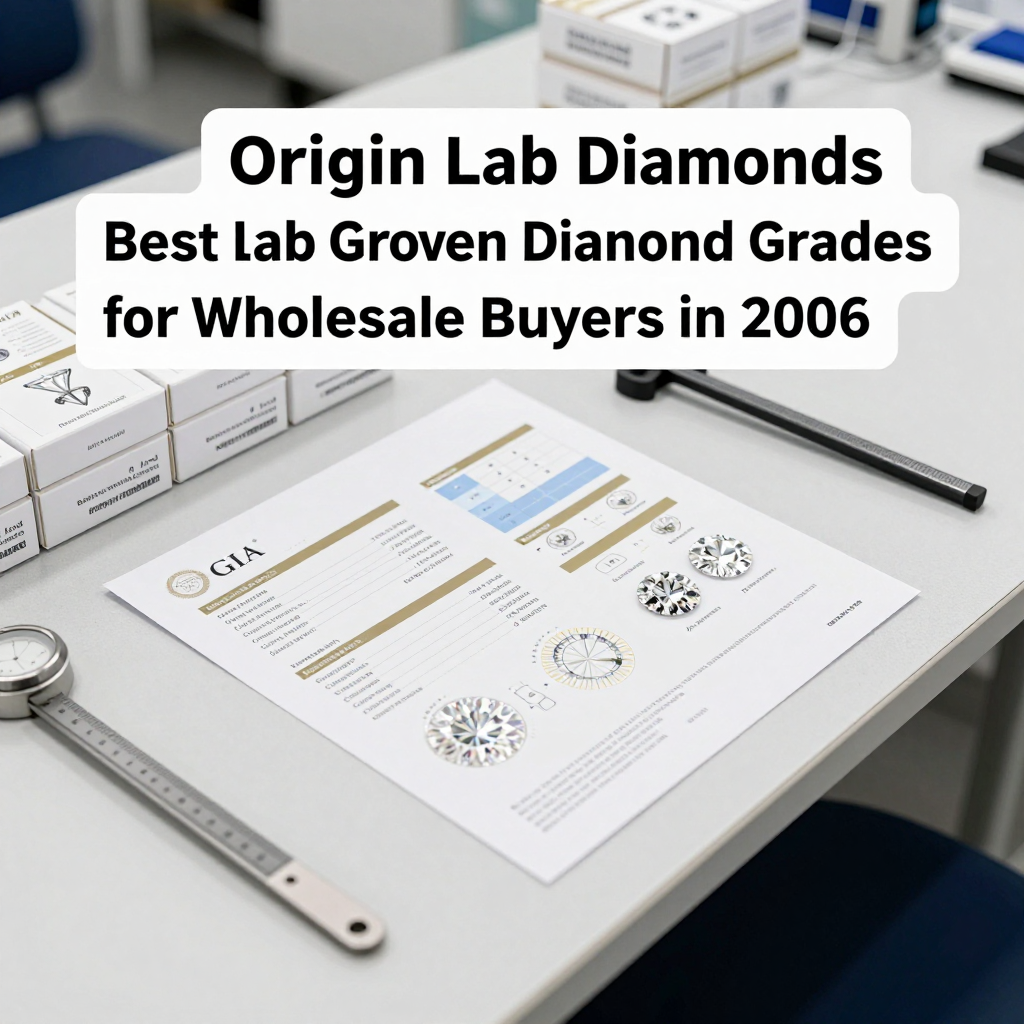
Buyer Comparison Table
| Factor | Option A | Option B | Buyer note |
|---|---|---|---|
| Buyer objective | Premium retail / bridal assortment | Volume wholesale / value-led assortment | Start with the sales channel, because it sets the buying rule. Premium programs usually need tighter grade consistency, stronger cut control, and more documentation. Value-led programs can accept a broader spec window if price, replenishment, and availability matter more than strict visual uniformity. |
| Price position | Higher landed cost, stronger presentation | Lower landed cost, broader margin control | A higher-grade parcel can support premium pricing, but only if the end customer sees the difference. A value-led grade often gives better margin protection when the jewelry design, channel, and buyer expectation do not justify overspec stones. |
| Color range | Near-colorless to colorless | Commercial near-colorless | Higher color grades support premium positioning, while commercial grades often improve margin and replenishment. The right range depends on retail price band, setting style, and how closely the customer will inspect the stone. |
| Clarity range | Higher clarity, lower inclusion visibility | Commercial clarity with controlled eye-clean appearance | Wholesale buyers should focus on eye-clean results, not only grading language. Ask what clarity floor the supplier can hold consistently across repeated lots and where the rejection threshold begins. |
| Cut standard | Tighter cut, polish, and symmetry expectations | Standard commercial cut tolerance | Cut quality affects brightness, return appearance, and sell-through. For melee and matched sets, consistency matters more than a single standout stone, so the acceptance rule should be written by lot type. |
| Documentation | Certificate-driven order | Inspection-driven order | Both models can work, but the RFQ should state whether the buyer needs stone-level certification, parcel documents, inspection reports, or internal QC records for receiving and customs. |
| Best fit by use case | Bridal, branded retail, top-tier display goods | Replenishment, private label, channel volume, controlled cost | This is the simplest decision filter. If the order is meant to win visual impact and branding, lean premium. If the order is meant to move repeatedly at scale, lean toward the grade that stays consistent and buys well over time. |
What Wholesale Buyers Mean by the Best Grade
For wholesale purchasing, the best lab grown diamond grade is the grade that balances appearance, consistency, and landed cost for a specific channel. A distributor supplying jewelry brands does not need the same grade mix as a retail chain buying bridal goods, and a private-label founder usually needs a different tradeoff again. In practice, best means the grade that fits the assortment and price structure, not the highest specification available on paper.
A useful buying frame is straightforward: define the target retail band, define the visual standard the customer will actually see, then work backward to the acceptable range for color, clarity, cut, finish, and matching. That approach avoids paying for overspec stones that do not change sell-through. It also makes supplier comparison more accurate, because two quotes with the same carat weight can still be built on very different grade assumptions.
Use a simple decision structure: what is the product, what is the channel, what is the acceptable visual result, and what landed cost keeps the program viable. That sequence is more useful than asking for the best stone in isolation, because wholesale buying is a comparison exercise, not a single-spec exercise.
- Match grade to channel, not to a generic ideal.
- Judge eye-clean appearance and lot consistency.
- Compare landed cost, not only stone price.
- Use the same grade logic for repeat orders to protect continuity.
Top 5 Grade Factors Wholesale Buyers Should Compare
When buyers compare the top options in a wholesale quote, the most useful ranking is not about supplier names or fake scorecards. It is a decision order: first the buyer objective, then the visual grade, then the cost structure, then the operational terms, and finally the documents. That keeps the discussion practical and prevents price from hiding the real tradeoffs.
If you are comparing the best lab grown diamond grades for a B2B program, use the same five questions on every quote: does it fit the channel, does it look right in the setting, can the supplier repeat it, what does it cost landed, and what paperwork comes with it. Those five checks are enough to separate a workable wholesale option from a quote that looks good only on paper.
- Channel fit: premium, private label, or volume replenishment.
- Visual fit: color, clarity, cut, and finish in the finished product.
- Repeatability: can the supplier hold the same band across reorders?
- Landed cost: stone price, freight, packaging, and document costs.
- Operational fit: MOQ, lead time, QC, and shipping terms.
The Grade Range That Usually Works Best for Wholesale
There is no single grade that wins every wholesale case, but most B2B programs perform best inside a controlled commercial-to-premium range. That range is wide enough to protect supply and margin, but narrow enough to keep the finished jewelry consistent. For many buyers, a mid-to-high commercial grade delivers better economics than an ultra-premium spec, especially when the order includes multiple sizes or matched sets.
If the assortment is aimed at bridal, gifting, or higher-ticket retail, buyers should narrow the window and insist on stronger cut and finish control. If the assortment is aimed at fast-moving commercial jewelry, the priority shifts toward stable availability, repeatable appearance, and manageable price points. In both cases, the supplier should be able to explain the exact grade band offered for each stone size and product type.
The most practical approach is to ask for a grade map by size, shape, and intended use. Melee, calibrated sizes, loose stones, and finished jewelry programs should not be treated the same. A supplier who can define these bands clearly is easier to work with because the order can be repeated without re-learning the specification every cycle.
- Use a controlled grade band rather than the widest possible range.
- Keep premium and commercial assortments separate in the RFQ.
- Ask for size-by-size grading logic, especially for calibrated goods.
- Prioritize repeatability when building a reorder program.
How to Compare Color, Clarity, Cut, and Finish
Color, clarity, cut, and finish should be reviewed together, because a strong result in one area can be undermined by weakness in another. A diamond that looks clean but is poorly cut may not perform well in retail presentation. Likewise, a stone with excellent cut but inconsistent color across a batch can create sorting work and reduce the value of the order.
Wholesale buyers should ask suppliers to state the exact measurable range they can hold, then confirm how they sort and inspect. For example, a supplier may offer a color band that works for a branded bridal line, but only if the buyer accepts a specific clarity floor and a defined cut tolerance. That is why sample approval matters. It turns a general promise into a physical standard before the bulk order starts.
Finish also matters more than many buyers expect. Polish, symmetry, and consistency across a parcel affect both appearance and downstream manufacturing. If the stones will be set into jewelry, the buyer should confirm how the supplier handles chips, nicks, and match tolerance before approving production.
- Review color, clarity, cut, and finish as one system.
- Confirm the measurable grade band and the inspection method.
- Use sample approval to lock the acceptable visual standard.
- Check match tolerance for parcels and finished jewelry programs.
MOQ, Lead Time, and Order Structure
MOQ and lead time are often driven by grade complexity as much as by carat weight. A simple repeat order in one size and one grade band is usually easier to produce than a mixed order with several cuts, tight color targets, and certification requirements. Buyers should ask for MOQ by SKU, not only by total order value, because the practical production constraint is usually item-level.
Lead time should be discussed alongside sample approval. A supplier may quote a short lead time, but that time is only useful if the buyer has already approved the sample and confirmed the spec sheet. A disciplined order process typically includes inquiry, sample review, confirmation of tolerances, production scheduling, final QC, and shipment booking. Buyers that compress these steps without documentation usually pay for it later through delays or rework.
When comparing suppliers, ask whether MOQ changes by shape, size, color, clarity, or certification requirement. Also ask whether rush orders are possible, what conditions apply, and whether partial shipment is supported. These details are operational, not cosmetic; they determine whether the supplier can actually support a wholesale replenishment program.
- Request MOQ by SKU and by grade band.
- Confirm lead time only after sample approval.
- Ask what changes MOQ: shape, size, specs, or certification.
- Check whether partial shipment or split lots are available.
Specs, Materials, and Packaging for B2B Orders
Wholesale buyers should define the product spec in a way that removes ambiguity. At minimum, the RFQ should specify shape, size, carat weight, color range, clarity range, cut expectation, polish, symmetry, and any tolerance allowed for variation. If the order includes loose stones for jewelry manufacturing, also define the parcel format, matching requirements, and acceptable variation between stones in the same lot.
For packaging, the buyer should state whether stones must be packed individually, by parcel, or by production batch. Finished retail programs often need labeled trays, controlled packing lists, and carton-level traceability. Manufacturing buyers may prefer bulk packs organized for internal sorting. The right packaging method depends on downstream handling, but the requirement should always be written into the order before production begins.
Material descriptions should be plain and precise. Say whether the order is for lab grown diamonds, loose stones, matched pairs, melee, or finished jewelry components. Avoid vague descriptions that leave the supplier guessing. Good packaging and exact material wording reduce receiving disputes, speed up QC, and make reorders easier to manage.
- Specify shape, size, carat, color, clarity, cut, polish, symmetry, and tolerance.
- State the parcel format and traceability needs.
- Choose packaging based on how the buyer will receive and process the goods.
- Use exact material wording to avoid disputes at receiving.
QC, Compliance Documents, and Certification
A strong wholesale grade is not enough if the quality control process is weak. Buyers should ask how the supplier inspects stones before shipment, what defects are screened out, how re-sorting is handled, and whether the supplier can share inspection records. Internal QC matters because it reduces surprises when the goods arrive and protects the buyer from avoidable chargebacks or returns.
Compliance documents should be confirmed early. Depending on the market and the customer’s requirements, the buyer may need invoices, packing lists, origin statements, stone-level documentation, or third-party certification and reports. The exact document set should be defined in the RFQ and matched to the destination market before the order is placed. Buyers should not assume that a supplier’s default paperwork will satisfy their channel or customs process.
Certification is useful when the channel requires it, but it should be requested with a clear budget and timing plan. Certification can affect lead time and order cost, so buyers need to decide whether every stone needs it or whether only selected SKUs do. That decision should be made intentionally, not after production is already underway.
- Ask how QC is performed before shipment.
- Define the exact compliance documents needed for the market.
- Confirm whether certification is required for all SKUs or only selected items.
- Align document requirements with lead time and order budget.
Shipping, Risk, and Buyer Controls
Shipping terms should be part of the buying decision, not an afterthought. Wholesale buyers need to know who is responsible for export preparation, freight booking, insurance, customs paperwork, and delivery handoff. A lower unit price can disappear if the shipping method is unclear or if the buyer must absorb unexpected handling costs. The quote should show what is included and what is excluded.
Risk control begins with the sample, continues through approval, and ends with final inspection before dispatch. Buyers should request batch photos, packing confirmation, and shipment details tied to the approved order. For recurring programs, it is wise to keep a stable reference sample and reuse the same written spec on every reorder. That habit reduces drift in grade expectations over time.
The cleanest wholesale process is one where the supplier can quote consistently, the buyer can compare accurately, and both sides can trace the goods from approval to shipment. That is what makes a grade useful at scale: not just how it looks in isolation, but how reliably it can be repeated across lots and seasons.
- Clarify freight, insurance, customs, and delivery responsibility.
- Use sample approval, batch photos, and final inspection as control points.
- Keep one reference spec for repeat orders.
- Compare landed cost, not only ex-works price.
RFQ Checklist for Wholesale Buyers
A precise RFQ saves time and improves price accuracy. It also helps the supplier quote the right grade band instead of guessing. Buyers should include business context, target market, product type, and the exact spec fields needed for production and compliance. A good RFQ lets suppliers answer on the same basis, which makes comparison meaningful.
Use the checklist below when requesting a quote. If a field is not finalized, state the acceptable range instead of leaving it blank. That gives the supplier enough information to quote responsibly while preserving room for negotiation. For multi-SKU orders, repeat the fields per SKU so the pricing and lead time are tied to the actual mix of goods.
The goal is not to write the longest RFQ. The goal is to write one that removes ambiguity where it matters most: grade, quantity, packaging, documents, timing, and shipping responsibility. A short but exact RFQ usually gets a stronger response than a long but vague one.
- Product type and target market.
- Shape, size, carat weight, quantity, and grade range.
- Color, clarity, cut, polish, symmetry, and tolerance.
- MOQ, target order volume, and repeat-order plan.
- Sample approval requirement and deadline.
- Packaging format, labeling, and traceability needs.
- QC standard, inspection report request, and acceptance criteria.
- Compliance documents, certification needs, and destination country.
Related Origin Lab Diamonds pages
- lab-grown diamond product range
- wholesale price factors
- diamond specifications
- quality inspection
- certification and reports
FAQ
What is the best lab grown diamond grade for wholesale buyers?
The best grade depends on the selling channel. Premium bridal and branded retail programs usually need tighter color, clarity, and cut control, while value-led wholesale programs often perform better with a stable commercial grade that protects margin and supply.
Should wholesale buyers always choose the highest grade available?
No. The highest available grade is not always the best buying choice. It can raise cost without improving customer perception enough to justify the margin loss. Buyers should match the grade to the finished product, retail price, and reorder strategy.
What are the top comparison factors in a wholesale lab grown diamond quote?
The five most useful comparison factors are channel fit, visual fit, repeatability, landed cost, and operational fit. Those checks are more useful than comparing price alone because they show whether the grade can actually support the program.
What MOQ should buyers expect for lab grown diamonds?
MOQ varies by supplier, size, shape, grade band, and certification requirement. Buyers should request MOQ by SKU and confirm whether it changes with tighter tolerances, mixed parcels, or special packaging needs.
How long is the usual lead time for wholesale orders?
Lead time depends on the order mix, sample approval status, and document requirements. Simple repeat orders can move faster than mixed or tightly specified orders, but buyers should confirm timing only after the supplier has reviewed the final RFQ and sample standard.
What documents should be included in a wholesale lab grown diamond order?
The exact document set depends on market and channel, but buyers commonly need invoices, packing lists, product specifications, inspection records, and certification or reports when required. These should be stated in the RFQ before production starts.
Ready to quote this project?
Send specs, quantity, customization needs, destination, and deadline.
Request a quote